Metal Castings and their lasting importance in today’s global industries
Secret Advantages of Using Steel Spreadings Throughout Various Industries
Metal castings function as an important component in different markets, providing distinctive advantages that improve performance and effectiveness. Their layout versatility permits elaborate forms, while their material residential or commercial properties add to total sturdiness. Cost-effectiveness and sustainability further highlight their relevance in modern-day manufacturing. As industries proceed to evolve, comprehending the full scope of advantages offered by steel spreadings ends up being necessary for critical decision-making. What implications do these benefits hold for future advancements?
Boosted Layout Versatility
Although standard manufacturing methods frequently impose limitations on layout complexity, metal spreadings supply impressive flexibility that enables intricate shapes and features. This flexibility allows designers to develop parts that would be tough or impossible to achieve with various other strategies. The casting procedure, which involves putting molten steel into mold and mildews, can fit a variety of geometries, making it ideal for varied applications ranging from vehicle to aerospace.
Furthermore, the capacity to produce both large and little get rid of thorough styles boosts the total capability of the items. Designers can maximize weight and performance by incorporating intricate inner structures, such as cooling channels or support ribs (Wisconsin Aluminum Foundry). Additionally, metal spreadings can help with the unification of multiple functions right into a single component, decreasing the demand for setting up and reducing possible factors of failing. The improved layout adaptability of metal castings not just promotes technology but also contributes significantly to effectiveness in manufacturing processes.
Enhanced Material Qualities
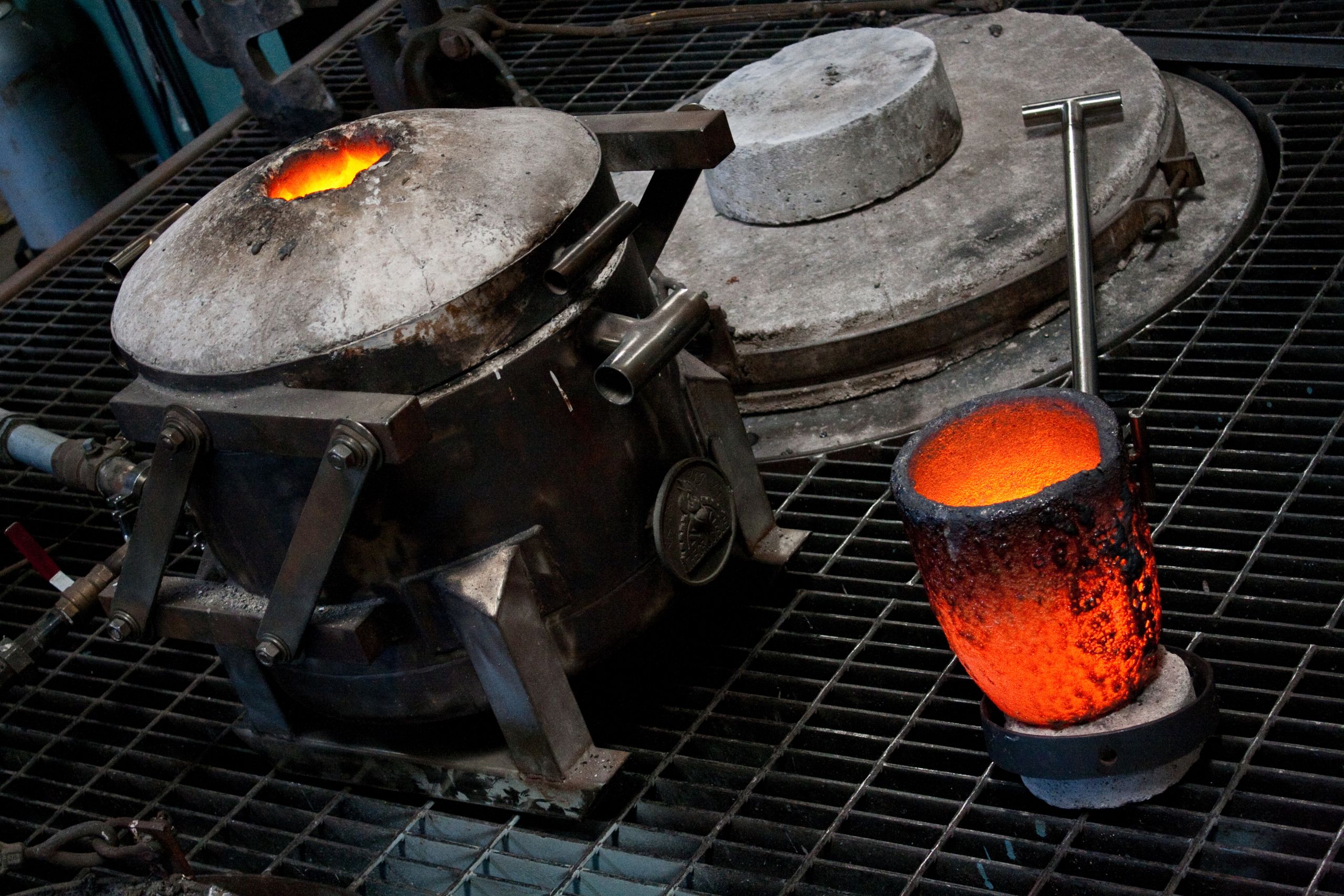
When thinking about the advantages of steel spreadings, one of one of the most substantial benefits hinges on their boosted material buildings. Metal spreadings usually show improved strength and durability compared to various other producing methods. This increased durability is credited to the controlled air conditioning procedure during casting, which permits for an uniform microstructure. Consequently, cast steels can endure higher levels of tension and tiredness, making them suitable for requiring applications.
In addition, steel castings offer premium rust resistance, particularly when alloys are made use of to improve efficiency in severe settings. This particular prolongs the life-span of parts and minimizes the need for constant replacements. Furthermore, the capability to create intricate forms without jeopardizing architectural honesty further boosts the capability of cast components. As a result, sectors varying from vehicle to aerospace benefit from the robust and dependable nature of metal castings, making certain peak performance and security in their applications.
Cost-Effectiveness and Lowered Waste
Steel castings provide a substantial advantage regarding cost-effectiveness and decreased waste, matching their boosted material buildings. Typical production techniques typically call for comprehensive machining and ending up processes, which can produce considerable scrap material and sustain high labor prices. In comparison, metal spreading permits the manufacturing of complex forms in a solitary procedure, decreasing the requirement for extra processing and decreasing product waste.
Steel spreading makes use of molds that can be reused numerous times, even more reducing manufacturing prices over time. Metal Castings. The capability to cast detailed styles also means that makers can attain better design flexibility without jeopardizing on quality, thereby preventing expensive redesigns. Generally, the cost-effectiveness of steel spreadings not just benefits manufacturers by lowering expenditures but likewise sustains sustainability initiatives by lowering waste. This twin advantage makes steel castings a favored selection across numerous sectors, including automobile, aerospace, and building and construction
Boosted Manufacturing Performance
Boosted manufacturing effectiveness is a considerable advantage of metal spreadings, as it promotes structured production procedures. By optimizing these procedures, business can efficiently reduce material waste and attain faster turnaround times. This combination not just enhances efficiency but also adds to total operational excellence.
Structured Production Processes
As producing needs progress, the fostering of streamlined processes comes to be essential for boosting manufacturing effectiveness. Steel spreadings play an essential role in accomplishing this goal by promoting quicker production cycles and lowering preparations. Their intrinsic design adaptability enables makers to create complicated shapes with marginal setting up needs, consequently simplifying process. Advanced spreading strategies, such as precision casting and 3D printing, add to greater precision and uniformity, more maximizing operations. By integrating metal castings right into making procedures, business can accomplish better automation, which lessens hand-operated treatment and increases throughput. Streamlined processes not just enhance productivity but likewise enable manufacturers to respond swiftly to market adjustments, making certain competition in an increasingly vibrant landscape.
Minimized Product Waste
Minimizing material waste is a vital benefit of making use of metal castings in production. This process enables for near-net-shape manufacturing, where components are developed with minimal excess product. By employing steel spreading strategies, producers can considerably lower the amount of scrap produced compared to typical machining methods. This reduction in waste not just conserves raw products however likewise reduces costs connected with product procurement and disposal. In addition, much less waste adds to extra lasting manufacturing techniques, aligning with ecological objectives. The performance achieved through metal castings improves overall production procedures, allowing companies to maximize resource use while keeping high quality criteria. This calculated approach inevitably brings about enhanced economic performance and a lowered environmental impact, benefiting both makers and society at big.
Faster Turnaround Times
Faster turn-around times represent a remarkable advantage in the domain of metal castings, improving total manufacturing efficiency. By streamlining the spreading process, manufacturers can significantly reduce preparations, enabling quicker delivery of ended up products. This performance is specifically valuable in markets that require quick reaction to market changes, such as aerospace and auto markets. The capability to create elements swiftly not only fulfills client expectations however likewise lessens downtime in assembly line. In addition, innovations in modern technology, such as improved mold layout and automation, add to these expedited procedures. Consequently, faster turn-around times in steel blog here casting not just boost functional result but likewise provide an affordable side, making it possible for firms to respond promptly to developing consumer requirements and minimizing the danger of obsolescence.
Superior Stamina and Toughness
While various materials compete for supremacy in manufacturing, metal castings regularly show superior toughness and sturdiness, making them an ideal option for numerous applications. The intrinsic residential properties of metals, such as their high tensile stamina and resistance to wear, guarantee that castings can endure extreme operational problems without failure. This durability converts right into longer life span for parts, reducing the frequency of replacements and upkeep.
In addition, the ability to produce complicated geometries with metal castings makes it possible for manufacturers to create components that maximize strength without adding unneeded weight. This is especially beneficial in sectors that focus on efficiency and performance, such as aerospace and vehicle. In addition, steel spreadings exhibit superb resistance to destructive atmospheres and extreme temperature levels, enhancing their applicability in challenging settings. In general, the remarkable stamina and longevity of metal castings place them as a fundamental product in design, adding to the reliability and durability of various products and systems.
Adaptability Throughout Industries
The fundamental toughness and sturdiness of steel spreadings make them a versatile selection across a wide variety of markets. From automobile manufacturing, where precision-engineered components are important for performance and security, to aerospace, where lightweight yet durable parts are essential for trip, metal castings play a substantial function. In the building market, spreadings are used in architectural elements and structural frameworks, making certain longevity and security. The power market uses steel castings in machinery and tools, assisting in reliable operations in power generation and sustainable power systems. Furthermore, the clinical area take advantage of customized spreadings used in surgical tools and devices, emphasizing the need for dependability. This adaptability permits suppliers to satisfy distinct requirements and regulatory requirements, boosting product capability and efficiency. Generally, the flexibility of steel spreadings places them as a very useful resource throughout numerous markets, driving technology and effectiveness.
Payment to Lasting Practices
Steel spreadings play a substantial role in advertising sustainable practices via their resource recycling effectiveness. By reducing waste generation and carrying out power preservation methods, the spreading procedure demonstrates a dedication to environmental responsibility. This method not only advantages suppliers but also adds favorably to the wider environment.
Source Recycling Effectiveness
Emphasizing resource reusing efficiency, metal castings play an essential duty in lasting techniques by reducing waste and reducing the need for new raw products. The process of reusing steels is extremely effective; it permits the reuse of scrap materials, which can be melted down and changed into brand-new spreadings. This technique not only preserves energy yet additionally lessens ecological impact by decreasing the demand for mining and extraction tasks. Furthermore, recycled metal maintains its intrinsic properties, ensuring that the high quality of spreadings remains high. In this means, markets that integrate recycled steels add substantially to a round economy, advertising sustainability while at the same time decreasing prices related to resources procurement. Wisconsin Aluminum Foundry. This reliable usage of resources exhibits a dedication to environment-friendly manufacturing methods
Reduced Waste Generation
Minimizing waste generation is an essential element of advertising lasting practices within the metal casting market. By optimizing production strategies and using sophisticated innovations, producers can markedly minimize scrap and malfunctioning materials. Techniques such as precision casting and near-net form procedures enable better material use, straight minimizing the quantity of waste generated. Additionally, the unification of recycled metals right into the casting procedure not only decreases the need for virgin materials however additionally contributes to a round economic situation. This method aligns with environmental regulations and customer assumptions for lasting techniques. As a result, minimized waste generation not only profits the setting but also improves operational efficiency, inevitably bring about cost savings for companies in different industries leveraging steel spreadings.
Energy Conservation Techniques
Maximizing energy usage is an essential part of sustainable methods in the steel spreading industry. By executing advanced technologies and techniques, such as regenerative heating unit and energy-efficient heaters, companies can significantly minimize power use during production. In addition, making use of computer-aided style (CAD) software application makes it possible for exact modeling, decreasing material waste and power expenditure. Utilizing scrap metal recycling further saves power, as it requires much less energy compared to generating brand-new steel. Sector leaders are increasingly adopting renewable resource sources, such as solar and wind power, to reduce their carbon impact. These energy conservation approaches not just improve operational effectiveness but also contribute to the overall sustainability of the steel casting sector, straightening with international environmental objectives and reducing reliance on nonrenewable fuel sources.
Regularly Asked Inquiries
What Industries Most Frequently Use Metal Spreadings?
Industries that commonly use metal castings consist of vehicle, aerospace, production, and building. These sectors depend on steel castings for generating components that require sturdiness, precision, and toughness to fulfill their operational needs and requirements.
Exactly How Does Steel Casting Contrast to Other Manufacturing Processes?
Steel casting uses advantages such as style flexibility and facility shape formation, distinguishing it from various other manufacturing processes. Unlike machining, it effectively creates big amounts, Check Out Your URL making it ideal for different markets needing long lasting components.
What Kinds of Metals Are Commonly Utilized in Castings?
Usual metals utilized in castings consist of aluminum, steel, iron, and bronze. Each steel supplies special buildings, making them hop over to these guys appropriate for numerous applications in industries such as automobile, aerospace, and building and construction, amongst others.
Exist Any Type Of Environmental Interest In Metal Casting?
Environmental interest in metal spreading consist of air and water air pollution from discharges and waste, energy usage, and source exhaustion. Sustainable practices, such as recycling and making use of cleaner innovations, can alleviate these negative influences in the industry.
Exactly How Can I Pick the Right Casting Approach for My Job?
To pick the right spreading technique, one need to think about factors such as the material kind, complexity of the design, production quantity, spending plan constraints, and wanted surface finish, guaranteeing placement with task needs and purposes.
Steel castings provide a substantial benefit regarding cost-effectiveness and reduced waste, enhancing their improved product residential properties. Advanced spreading strategies, such as precision spreading and 3D printing, contribute to greater accuracy and uniformity, further enhancing procedures. Decreasing product waste is an important benefit of utilizing steel spreadings in production. Emphasizing resource recycling effectiveness, steel spreadings play a necessary duty in sustainable techniques by minimizing waste and reducing the need for new raw products. Furthermore, the unification of recycled metals into the spreading procedure not only lowers the need for virgin products yet likewise adds to a circular economy.